

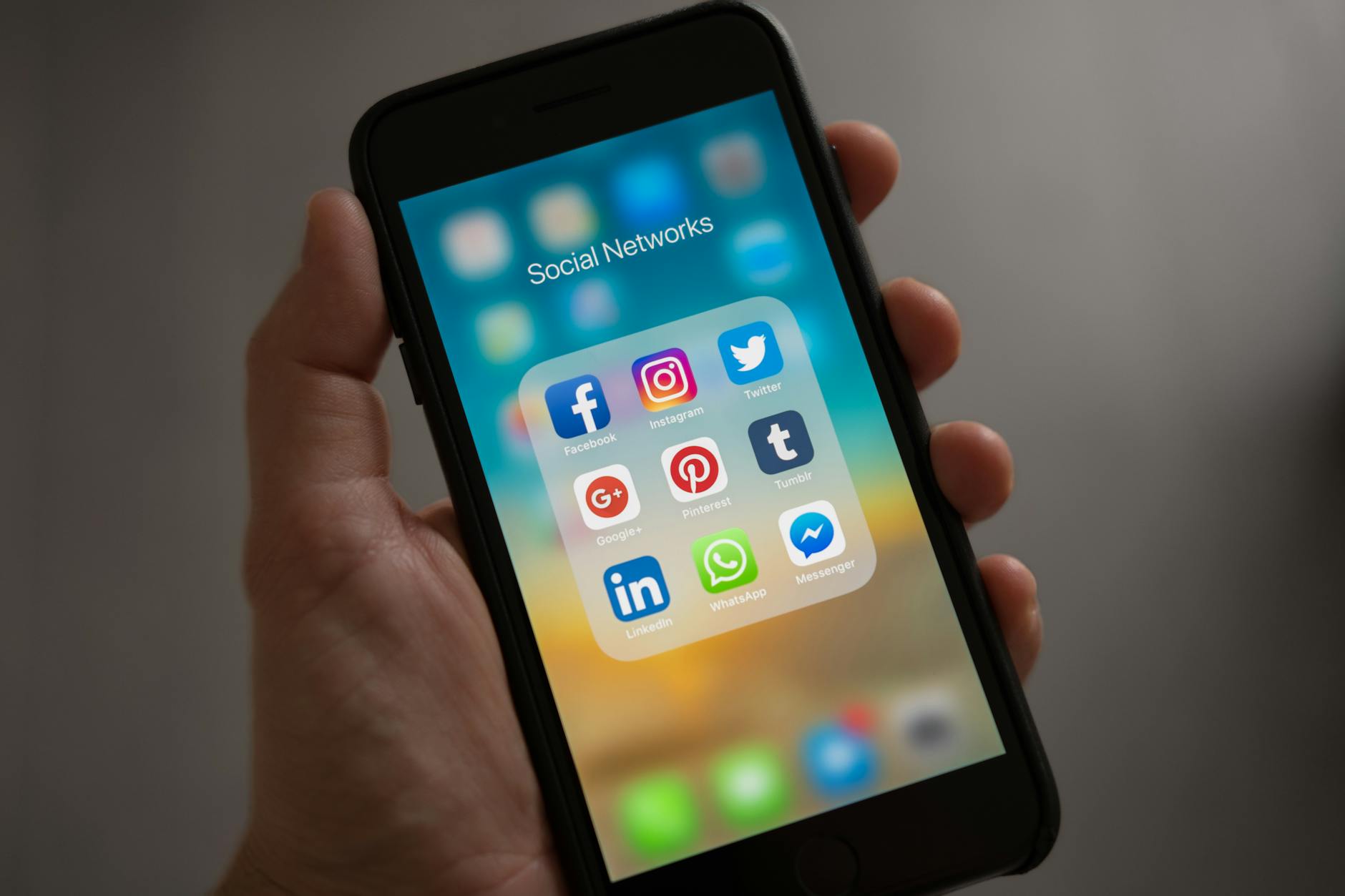
Australia is banning children from all social media platforms. Under a newly passed law, no one under the age of 16 will be allowed to use Facebook, Instagram, Snapchat, TikTok, or any similar platform.
Today, I want to take a deeper look at the reasons behind banning social media, as well as some criticisms and challenges.
We’ll end by thinking about the question, “Should Social Media Be Banned for Children?”
Listen Here!
 Apple Podcasts
 Spotify
 YouTube
Interactive Transcript!
You Can Now Read and Listen at the Same Time With an Interactive Transcript!

Vocabulary
- Ban (Noun/Verb): An official prohibition or restriction of something.
- The government introduced a ban on smoking in public places.
- Comply (Verb): To act according to a rule, order, or request.
- Social media companies must comply with the new regulations or face penalties.
- Enforce (Verb): To make sure laws or rules are followed by applying authority.
- The police are responsible for enforcing traffic laws to ensure public safety.
- Age Verification (Noun): The process of confirming someone’s age to ensure they meet age-related requirements.
- The website requires age verification to confirm users are over 18 years old.
- Regulate (Verb): To control or supervise something by implementing rules or laws.
- Governments often regulate industries to ensure safety and fairness for consumers.
- Addictive (Adjective): Causing a strong and harmful need to regularly have or do something.
- Social media platforms are designed to be addictive, keeping users engaged for long periods.
- Motivation (Noun): The reason or reasons one has for acting or behaving in a particular way.
- Her motivation for studying so hard was to secure a scholarship for university.
Australia’s Proposal to Ban Social Media for Children
The Australian government has passed a new law that will ban social media for anyone under the age of 16.
The bill was introduced to the Australian parliament last year and passed at the end of December. It demands that social media platforms such as Facebook, Instagram, and TikTok prevent users under 16 from accessing their services. The law will now require these companies to comply with the law within a year or they will be fined a lot of money.
The Australian government has said that the social media companies will be responsible for enforcing the age ban.
Most of these social media platforms already require members to be over a certain age before joining, but don’t really enforce the policies. Instead, it has been the job of parents to decide whether or not a child can sign up to a service.
Now, the companies themselves will need to introduce age verification systems. If they don’t, they will be fined potentially millions of dollars.
There will be certain exceptions made to the policy. For example, messaging apps and gaming platforms may not be included.
Whether they are included or not, this Australian law is a major development in how countries regulate social media. Other countries could follow and learn from Australia’s approach.


What is the Motivation Behind Australia’s Social Media Ban?
Why is Australia banning social media for children? There are many different reasons.
There is growing amount of research and a widespread concern about the negative effects of social media on young people. As digital platforms have become part of daily life, especially for younger generations, the government and other groups have become increasingly focused on protecting children from the risks of online interactions.
A number of studies have demonstrated that time spent on social platforms can lead to increased feelings of anxiety, depression, and loneliness in young people. Social media encourages users to compare themselves to others, especially with people promoting their ideal lives on Instagram and TikTok.
The addictive nature of social media platforms, which are designed to keep users engaged through endless scrolling and notifications, can lead to unhealthy levels of screen time.
Beyond mental health concerns, protecting children’s safety online is another major reason behind the ban. Social media platforms can expose children to various dangers, including cyberbullying, online predators, and harmful content.
Additionally, social media platforms often collect and store vast amounts of personal data, which can be accessed or misused. While adults are old enough to consent to the use of their personal data, children are usually too young to do so!
Another motivation behind the ban is the potential negative effect social media has on children’s academic development. Spending too much time on social media can lead to poor academic performance, reduced attention spans, and difficulty concentrating on tasks.
Social media platforms can expose children to harmful, inappropriate, or disturbing content, ranging from violence to explicit material. While social media companies try to limit or hide this content, they are never 100% successful.
All of these reasons so far have been based on the health and safety of children.
However, another reason for the Australian government introducing this law is that the public is demanding change. Parents, teachers, and health experts have all been asking for children to be protected from the negative effects of social media.

Challenges and Criticisms
While the motivations behind Australia’s social media ban are good, there are still challenges and criticisms.
Challenges
One of the most significant challenges behind banning an entire category of popular websites and apps across a whole country, is the difficulty of enforcing the ban. Social media platforms are international and global companies, which presents challenges.
For instance, many children, especially older children, are often good with technology and will find ways to still use social media.
I remember that my high school internet banned gaming sites on the school laptops, but everyone knew how to get around the ban.
Many children and teenagers are already skilled at using virtual private networks (VPNs), fake identities, or even borrowing adults’ accounts to access social media platforms. While social media may be banned for Australian children, how about if they made an account using a different country’s internet?
Even if these companies create strong age verification systems, it will still be almost impossible to monitor every single child.

Criticisms
There are also many criticisms of the ban.
For example, banning social media platforms could limit children’s rights to expression. Social media is a space for young people to express themselves freely.
Social media can also serve as an educational tool, offering children access to valuable content, such as tutorials, information on current events, and opportunities for cultural exchange. There are interest-based groups, forums about issues teenagers face, and much more. The ban would effectively get rid of these.
Social media has also become a really important part of children’s social lives. Social media is a place where people connect with people, make friends, and form relationships. Without social media, many children will be cut off from these friends and relationships formed online.
An interesting criticism is that the ban will create economic and technological disadvantages. I work with social media every single day in my business, and I have friends who work as social media managers, marketing professionals, and brand managers.
They need to understand and know how to use social media to be successful in their jobs. Banning social media will be cutting off many children from learning the nuances of these platforms.

Global Context
Australia is not alone in attempting to regulate access to social media. Countries around the world are beginning to take more action to regulate social media platforms.
One of the most ambitious efforts to regulate social media has come from the European Union (EU), which introduced the Digital Services Act (DSA) in late 2020. This law imposes stricter rules on large online platforms.
They now need to have high levels of privacy, safety, and security for people under the age of 18 using the platforms. The DSA also places greater responsibility on companies to remove illegal content more quickly.
The UK has also introduced the Online Safety Act which aims to make social media safer for all users, especially children. The idea was to make the UK the safest place in the world to be a child online.
Australia, however, will go further than these two countries by completing restricting access to social media for children.
One example of a major country doing something similar is China. Of course, China has always had strict internet policies with many websites banned or not available, but in 2021 they introduced laws limiting the amount of time children can spend online.
For example, one policy limited children under 18 to only three hours per week of online gaming and further restricted the time they could spend on popular apps like Douyin (the Chinese equivalent of TikTok). Like in Australia, the Chinese government was motivated by children’s mental health and education.

The Debate over Banning Social Media for Children
Hopefully, you now understand Australia’s social media ban for children and the motivations behind it. But what do you think?
Should children be banned from accessing social media? This is a controversial topic. We have to balance the benefits and harms of social media. Let’s take a quick look at the two sides of the debate.
Pros of Banning Social Media for Children
Let’s start with the reasons to ban social media for children.
First, banning social media could protect children from potential mental health problems. Young people are influenced by the posts on social media, and it has been shown this can lead to anxiety and self-esteem problems.
Second, it could also reduce the risk of cyberbullying. There is less chance for children to be harassed or targeted online.
Third, it would protect children from seeing inappropriate content.
Fourth, it would prevent children from becoming addicted to social media.
And finally, it might help children better focus on the real world and their education.

Cons of Banning Social Media for Children
On the other hand, many people are against completely banning children from social media.
It could limit children’s access to educational content, as social media can be a source of information and education.
Social media provides children with opportunities to connect with friends and family members, so banning it would potentially damage these relationships.
It could also limit children’s digital literacy. The ability to use social media is really important in modern society (both personally and often professionally too), but banning social media could prevent children from learning to use platforms.
And it would be really difficult to enforce a full social media ban!

Final Thought
What do you think?
Should social media be banned for children?
I’m really interested in hearing all of your opinions. Many of you listening will have your own children and will be considering how best to manage social media in their lives. What is your perspective?
Personally, I do think having some kind of age limits on social media is important, but I’m not sure I fully agree with a complete ban. I think social media is an incredibly important tool in the modern world, and it is vital people learn how to use it responsibly. Children should not be excluded from this.
At the same time, young people’s experience online should be safe and regulated.
Let me know what you think!
Extended Vocabulary List
Become a Patreon Subscriber to Access the Extended Vocabulary List!


Vocabulary Games and Activities!
Learn and practice vocabulary from this Thinking in English episode.
Practice using 5 different study games and activities – including writing, listening, and memorisation techniques!
Flashcards
Matching Game
Learning Game
Test Yourself
Listening and Spelling
Do you want to Think in English?
I’m so excited that you found my blog and podcast!! If you don’t want to miss an article or an episode, you can subscribe to my page!
