

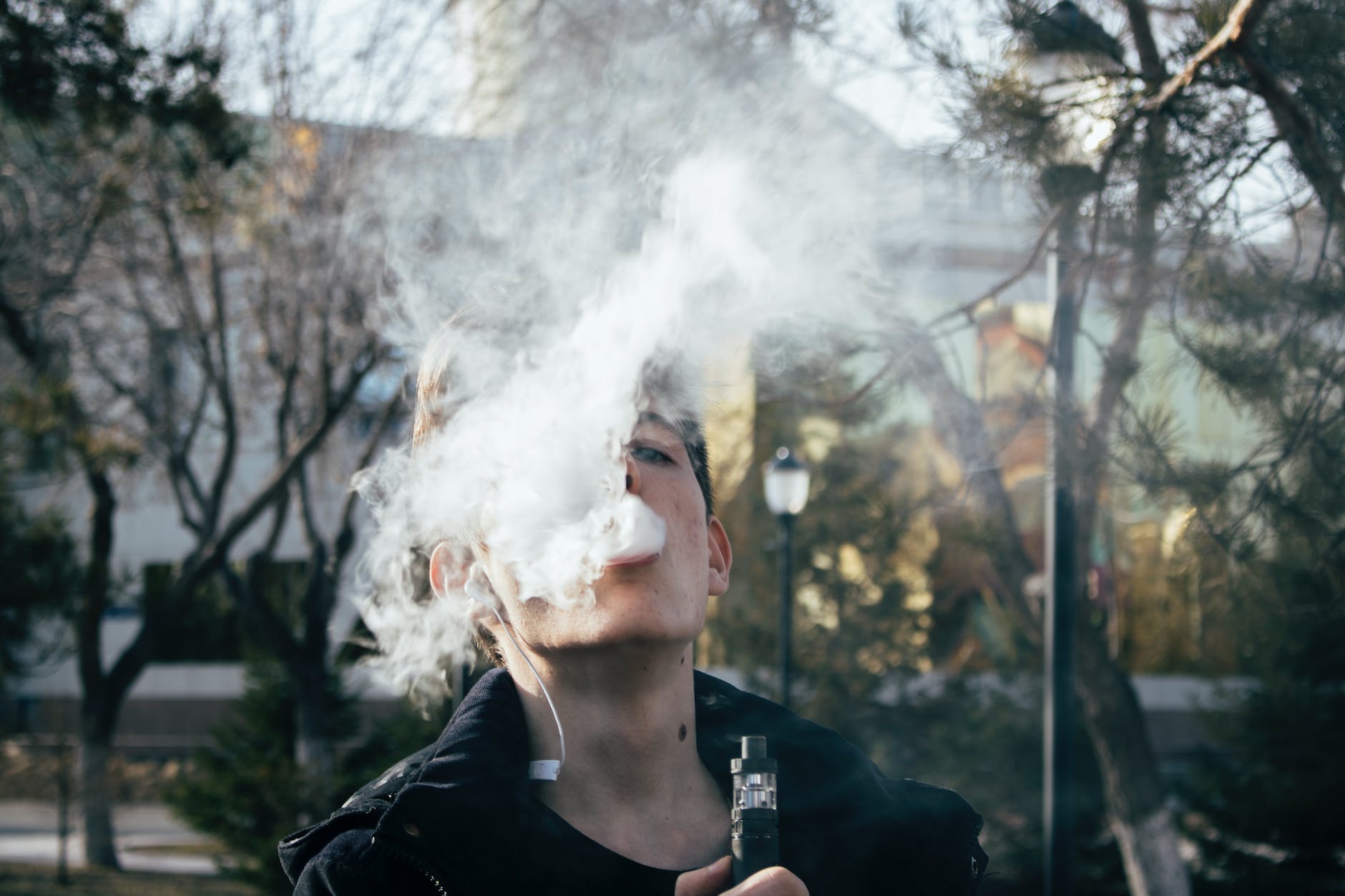
The United Kingdom has announced plans to ban certain types of e-cigarette and restrict the sale of other vaping products.
Let’s discuss some of the key terms surrounding “vapes”, look at why the UK is banning these products, and examine the debate around vapes in more detail!
Listen Here!
Interactive Transcript!
You Can Now Read and Listen at the Same Time With an Interactive Transcript!

Vocabulary
- Disposable (adjective): Designed to be thrown away after use.
- Disposable vapes have become increasingly popular among young people.
- E-cigarettes (noun): Electronic devices that heat a liquid to produce vapour, typically containing nicotine, offering an alternative to traditional smoking.
- Many individuals turn to e-cigarettes as a less harmful alternative to traditional tobacco products.
- Inhale/Exhale (verbs): To breathe in and out, respectively.
- Vapers inhale vapour during the act of vaping and exhale it into the air.
- Vapour (noun): A substance in the air, usually a liquid.
- The vapour produced by e-cigarettes is often less dense than the smoke from traditional cigarettes.
- Combustion (noun): The process of burning.
- E-cigarettes operate without combustion, reducing the number of harmful chemicals released into the air.
- Addictive (adjective): Causing a strong dependence on a substance, typically a drug like nicotine.
- Nicotine is known to be highly addictive.
- Regulation (noun): The process of controlling and managing an activity through rules and laws.
- Governments worldwide are considering increased regulation of the vaping industry.
The Banning of E-Cigarettes and Vapes
The UK has announced a national ban on the sale of disposable vapes. The new laws will also limit the flavours vapes can be sold in, and force companies to use less appealing packaging.
Over the past few years, the number of children and teenagers taking up vaping has grown rapidly. When I was back in the UK over the winter, I was shocked to see so many young people vaping.
Vaping has become so popular that even in my small hometown there is a dedicated “vape shop” selling different vaping liquids and devices.
While vapes and e-cigarettes were originally marketed as a method to stop smoking, or a healthier alternative to, smoking tobacco products, research is now showing that thousands of young people are starting vaping without ever smoking cigarettes.
Today, I’m going to take more detailed look into the UK’s decision to ban the sale of certain vape products and the wider debate around the subject.
I think this kind of episode is really useful for three reasons: it is an interesting current events topic, has lots of new vocabulary, and is a possible topic in future IELTS or other English proficiency exams!
Let’s start at the beginning. What is vaping?


What is Vaping?
In traditional smoking a person inhales the smoke caused by the burning of a tobacco leaf – usually in the form of a cigarette, cigar, pipe, or another similar device. Smoking tobacco delivers a rush of nicotine – a chemical that can make people feel positive and increase relaxation.
At the same time, smoking tobacco also brings hundreds of other chemicals into the human body – some of which are poisonous and incredibly harmful.
“Vapes” are often marketed as a healthier alternative to traditional smoking as they deliver the same nicotine but without the other side products or smoke.
“Vape” is a colloquial term for various different electronic smoking devices, include reusable e-cigarettes and disposable vapes.
The word vape, and the term vaping, references the act of inhaling and exhaling (breathing in and breathing out) vapour produced by these electronic devices.
Both vaping and smoking are associated with white clouds of smoke/vapour that user’s breath in and out. However, these substances are actually very different.
According to the dictionary defintion, smoke is “emitted from a burning substance” and vapour is substance suspended in the air that is usually a liquid (like water vapour). They are chemically very different.
Many of the harmful chemicals associated with smoking are produced in the act of combustion (meaning burning).
E-cigarettes and other reusable vapes tend to be battery-powered devices that heat a liquid (usually containing nicotine, flavourings, and other chemicals) to produce an inhalable vapour.
Vapes can also be single-use and designed to be thrown out once the liquid is fully used. And vapes and vape liquids also come in a variety of flavours that go beyond traditional tobacco.

UK Vaping Ban
Now I’ve defined some of the key terms associated with vapes and vaping, I think it is time to take a look at what is happening in the United Kingdom.
In January this year, the UK government announced plans to introduce new regulations on vaping products. Most importantly, there will be a nationwide ban on disposable vapes.
Disposable vapes are often cheaper than pricier reusable e-cigarettes and come in a wide variety of packages and flavours. This has largely appealed to younger people – especially children in the UK.
The UK has witnessed a concerning increase in the number of young people, including children and teenagers, engaging in vaping. We don’t currently know the long-term health impacts of vaping.
And the limited research on the subject and the potential risks associated with regular vaping, particularly using disposable devices, have raised alarm among health experts.
At the same time, the UK government is concerned about the environmental impact of disposable vaping products. They are difficult to recycle due to a combination of metals and plastics. And they are often found in litter.
In addition to the ban on disposable vapes, the UK government aims to introduce several other measures to address the issue.
The packaging of rechargeable devices will be redesigned to be plainer, reducing the appeal and attractiveness of these products. Cigarette packages in the UK are already free of branding apart from disgusting images of the consequences of smoking.
Stricter regulations will be imposed on where vapes are displayed in shops. They will be moved from shop counters to behind it. This aims to limit the visibility and accessibility of vaping products. The idea is that people are less likely to buy something if they can’t see it.
The government also plans to increase fines for retailers found illegally selling vapes to individuals under the age of 18.

Why is the UK Banning Vapes?
I think a further discussion of the reasons why the UK is banning and regulating some forms of vapes is important.
The core reason is due to health concerns and the issue of young people taking up vaping.
Health and Vaping
There is an important question here: is vaping dangerous?
The answer is not straightforward. It really depends on what you compare it to.
In comparison to cigarettes or other tobacco products, vaping is significantly less harmful to our lungs and bodies. The use of vapes is actually encouraged by doctors and health charities in many countries – but only as a method for quitting smoking.
For example, Action on Smoking and Health (a UK charity) has stated that “We do not support a ban on all or any products for adults due to their value in helping smokers to quit.”
As previously mentioned, vaping involves inhaling vapour rather than smoke – a substance without all of the dangerous products from burning tobacco.
However, vapour isn’t completely harmless. Its long-term effects are still unknown. According to doctors, the liquid used in vaping products contains chemicals which could, potentially, cause damage to lungs, hearts, and brains.
It is particularly important that people who don’t currently smoke cigarettes are discouraged from starting smoking. While healthier than tobacco, vaping isn’t healthy.
It can also lead to nicotine addiction, which may push non-smokers towards starting smoking.
And there is an issue in the UK of illegal vapes being widely available in convenience stores. These illegal or counterfeit products can contain unregulated chemicals, dangerous substances, and even drugs.
Part of the reason the UK is banning vapes is due to health concerns. The other is young people vaping.
Children and Vaping
Vaping is becoming increasingly common among British children and teenagers. It is now more common than smoking cigarettes – twice as common.
According to figures from the charity Action on Smoking and Health 11% of people between the ages of 11 and 17 in the UK have tried vaping.
In fact, 20% of people in that age range have reportedly tried vaping. 15% of 16-year-olds vape, and 18% of 18 year olds.
This means millions of young people in the UK are taking up the habit of vaping without ever smoking.

International Regulations on Vaping
The UK is not the only country to consider regulating vaping and vape products.
In 2022, the US banned all products from the major e-cigarette company Juul. The reason for the ban was a lack of research and data on the long-term health consequences of the company’s products.
Like the UK, the US was also concerned with high numbers of teenagers vaping – they first banned Juul from selling fruit flavoured vape liquids after a quarter of all US high schoolers reported using e-cigarette devices in 2019.
New Zealand introduced a similar law to the UK last year – banning disposable vapes and most flavours.
And Australia has ruled that vapes and e-cigarettes will only be available on prescription from a doctor or hospital. They are exclusively for people trying to quit smoking.
According to the BBC, countries like South Korea and Brazil have very strict rules on vaping products and nicotine. However, many countries do not have any laws, regulations, or even age limits on the sale of such products.

The Debate
Now we’ve looked at the key terms surrounding vaping, the reasons why the UK is introducing new laws, and the international regulations, let’s summarise the debate over banning or restricting e-cigarettes and vapes.
Arguments in Favour of Banning/Restricting Vapes:
Supporters of restrictions often talk about the alarming rise in vaping among teenagers, often attributing this rise to the accessibility and appeal of various vaping products. Interesting flavours and cheap disposable vapes are appealing to young people.
There is a need to protect young people from nicotine addiction and the potential health risks of vaping.
The reality is that while vaping is a healthier alternative to smoking tobacco products, the long-term consequences are still unknown. Until the effects are better understood, many people believe access to such products should be tightly controlled.
But we do know how addictive nicotine can be. While originally designed as a way to stop smoking, there is concern that young vapers will become addicted to nicotine and potentially form negative life-long habits.
Moreover, there is an environmental argument for banning disposable e-cigarettes and vapes. These products both contribute to increased litter and pose challenges for recycling due to their composition.
Arguments Against Banning/Restricting Vapes
On the other hand, there are also convincing arguments for why vaping shouldn’t be banned completely.
One of the main arguments against bans revolves around harm reduction. Vaping, especially as an alternative to traditional smoking, can significantly reduce the health risks associated with burning tobacco.
Researchers from Kings College London have found that vaping, instead of smoking, significantly reduces exposure to chemicals that cause cancer, heart disease, and lung problems.
Vapes are an excellent tool to help smokers stop smoking. In fact, in the UK research has shown that nicotine vapes are the most effective method of quitting smoking – much better than chewing nicotine gum or using nicotine patches.
There is also an argument around freedom of choice for adults. People argue that adults should have the freedom to make decisions about their own consumption habits, and responsible adults should not be restricted in accessing products that can actually help them.
Others argue that instead of an outright ban, regulations and restrictions are much more effective. Imposing strict quality controls, age restrictions, and educational measures may be more effective.
Finally, critics of stricter bans are sometimes concerned about the emergence of a black market. Getting rid of legal access, especially for people already addicted to the products, could drive customers towards unregulated and potentially dangerous alternatives.

Final Thought
Today we’ve looked at the question of banning or restricting vapes. We’ve discussed some of the key terms and vocabulary around the issue and looked at why the UK government is introducing new restrictions.
I then summarised the debate.
On the one hand, bans and regulations could protect young people, reduce nicotine addiction, prevent future health consequences, and help the environment.
On the other hand, these products are very effective tools to help smokers stop smoking, are a healthier alternative to tobacco products, and there are concerns about black markets.
But what do you think? What is your opinion on this issue? Should vaping be banned?
Extended Vocabulary List
Become a Patreon Subscriber to Access the Extended Vocabulary List!
Vocabulary Games and Activities!
Learn and practice vocabulary from this Thinking in English episode.
Practice using 5 different study games and activities – including writing, listening, and memorisation techniques!
Flashcards
Matching Game
Learning Game
Test Yourself
Listening and Spelling
Do you want to Think in English?
I’m so excited that you found my blog and podcast!! If you don’t want to miss an article or an episode, you can subscribe to my page!

Every year many people die because of tobacco consuming and whether exists a thing to be banned it is just it. We know the sure connection between tobacco consuming and cancer and it is a curious world the world where governments thinks banning potentially dangerous products and don’t ban a product which surely kill million people. My father was one of this people. He passed away in 2013 for bladder cancer. When I asked my doctor if there was a genetic predisposition towards bladder cancer, he answered the only connection on bladder cancer was smoking, as well as for the most types of cancer. Then, why authorities don’t ban smoking cigarettes and other products tobacco based?
It is really contradictory another aspect of this debate on electronic cigarettes banning or limiting, disposable or not, if we look at the latest years public policies: the argument about the unknown possible consequences on the long term. Actually, I think it is a valid aspect to consider referred to any issue involving food and drugs (and also vapor). Yet everyone remembers the massive campaign in favor to anti-COVID vaccine, which was very briefly experimented, promoted by the most part of western countries. The unknown possible consequences, in that case, were ignored. With some sarcasm we could say that vapor unknown consequences are more dangerous than drugs unknown, in the governments opinion. I had the vaccine, first dose, second dose… then, stop dose!!! I thought about precautionary principle I always agree with, not only on electronic cigarettes.
no vapes more taxes