

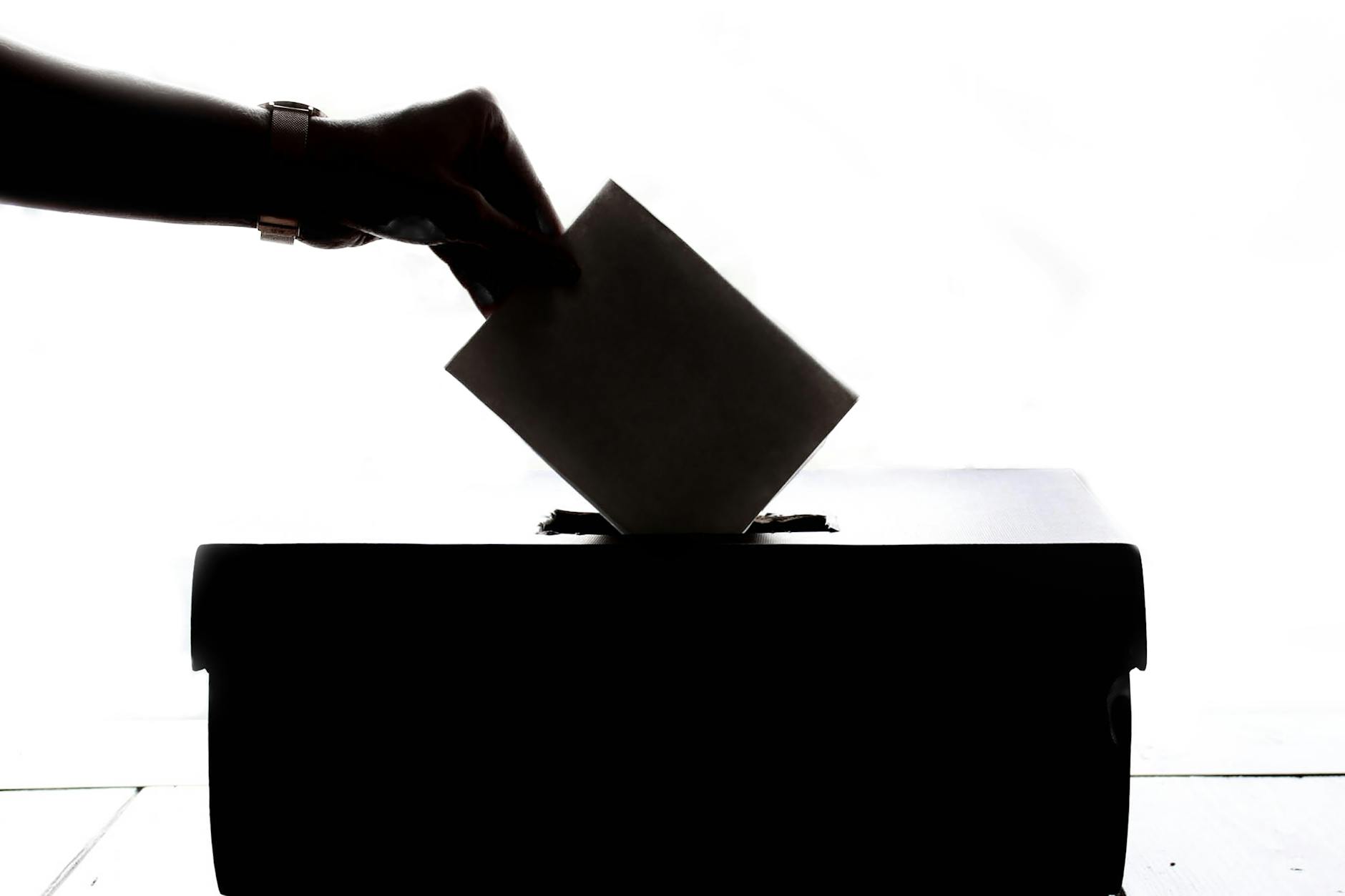
On July 4th, 2024, the UK will hold a general election to elect a new government, parliament, and Prime Minister.
In this episode, I want to provide a detailed and thorough explanation and introduction to how elections work in the United Kingdom!
Listen Here!
 Apple Podcasts
 Spotify
 YouTube
Interactive Transcript!
You Can Now Read and Listen at the Same Time With an Interactive Transcript!

Vocabulary
- Prime Minister (noun): The head of government in a parliamentary system who is responsible for running the government.
- The Prime Minister announced new measures to improve the economy.
- Parliament (noun): The supreme legislative body in a country, made up of elected representatives who make and pass laws.
- The new bill was debated in Parliament before it was passed.
- Election (noun): A formal process by which voters choose individuals to hold public office.
- The general election will be held next month to elect new Members of Parliament.
- Government (noun): The governing body of a nation, responsible for making and enforcing laws and policies.
- The government introduced a new healthcare policy to benefit all citizens.
- Vote (verb): To cast a ballot in an election.
- She decided to vote for the candidate who promised better education reforms.
- Constituency (noun): A geographical area represented by an elected official in a legislative body.
- Each MP represents a constituency and addresses the concerns of its residents.
- Campaign (verb): To work actively to promote a candidate, cause, or policy.
- The candidate campaigned vigorously across the country to gain support.
The UK Political System
Let’s start with a brief introduction to the UK political system, because it might be quite different to the system used in your country.
The United Kingdom is both a constitutional monarchy and a parliamentary democracy. What does this mean?
Constitutional Monarchy
A constitutional monarchy means that the UK has a monarch, a king, as the head of state. As it is a constitutional monarchy, however, the role of the head of state is largely ceremonial and symbolic, and the real political power is controlled by an elected parliament.
Every country has a head of state, but their roles and powers differ. We usually distinguish between the head of state and head of government. In the UK, the current head of state is King Charles III and the current head of government is Rishi Sunak.
In the UK system, a parliamentary system, the head of government (the Prime Minister) holds the real political power. In France, however, it is the head of state (President Macron) who holds most of the political power not the Prime Minister, and in the USA the head of state and head of government is the same person (President Joe Biden).
The UK’s constitutional monarchy dates back centuries. The current monarch, as of 2024, is King Charles III.
The King’s roles include ceremonial duties, such as officially opening the Parliament, and constitutional responsibilities, such as the granting of Royal Assent to legislation passed by Parliament. However, the King only acts on the advice of the Prime Minister and the government.
The Prime Minister, on the other hand, has most of the power. They are responsible for setting government policy, making high-level decisions, and representing the UK domestically and internationally.


Parliamentary System
The UK parliament is known as the Houses of Parliament. It is the place where all laws and decisions are debated, voted on, and decided.
It is a bicameral parliament, which means there are two different “houses” that make up parliament and each house has a different role or function or represents different people.
In the UK the House of Commons is the most powerful and main part of the parliament. The House of Commons is composed of Members of Parliament (MPs) who are elected by the public in general elections. Each MP represents one of 650 constituencies across the UK.
The House of Commons is responsible for making and passing laws, debating national issues, and checking the work of the government. The government is formed by the party that has the majority of seats in the House of Commons.
The leader of the party with the most seats in the House of Commons becomes the Prime Minister, who is the head of government. The current party with the most seats is the Conservative Party, and their leader is Rishi Sunak.
The other “house” is the House of Lords. The House of Lords is appointed, not elected. We can’t vote for the members of Lords, instead the Prime Minister is able to choose and nominate members. There are also a number of Lords who inherit their positions, and some senior religious figures are automatically given seats in the House of Lords.
The House of Lords now has a very limited role. It mainly checks, revises, and suggests changes to laws. It cannot stop a law being passed.

The General Election
Now that we understand a little more about the UK political system, let’s get into the main topic: general elections!
A general election is an election for choosing the representatives or leaders in government. Usually, general elections involve the entire country and every eligible voter (hence the term general).
The country is divided up into a number of electoral areas called constituencies. Each constituency is represented by one Member of Parliament (commonly known as an MP). There are currently 650 constituencies spread across England, Scotland, Wales, and Northern Ireland.
In each constituency, voters cast a single vote for the candidate they want to win. While most candidates for elections are associated with political parties, they don’t need to be. And in the election, you are technically voting for a person, a representative, rather than a party.
In the First Past the Post system, the candidate who gets the most votes wins. They don’t need an absolute majority (over 50% of the votes), they just need to get the most votes. This system is a winner-takes-all approach – it is definitely not proportional to the actual votes of the country.
The political party that wins the most constituencies overall typically forms the government. The First Past the Post system usually results in a clear majority for one party, but not always (2010 for example).
This is a straightforward system but can result in disproportionate representation. For example, it is possible that a party can win a lot of votes across the country but not achieve many seats in the House of Commons.
A party may achieve 15% of the votes across every constituency in the country, which would be nearly 100 seats if votes were proportional. But 15% is probably not enough to win in an individual constituency, so they probably wouldn’t win many seats at all.
Elections in the UK are quite different from other countries as there is no set date. They are typically held every five years, as this is the maximum time before an election is allowed to be called, but they can happen earlier.
This year’s general election will take place on July 4th, while the last election was 4 and a half years ago, in December 2019, and the election before that was just 2 years before that.

Political Parties in the UK
I’ll probably record a more detailed episode on the main UK political parties and who will win this election, but to understand British general elections you do need to know some of the political parties.
It is not a two-party system (although two of the parties are dominant). The Prime Minister is the leader of the political party with the most seats in parliament, and although voters are technical voting for individual candidates in the elections most British people tend to vote for the party they like.
The Conservative Party is a centre-right (increasingly more right-wing) party. They are often referred to as the Tories, and advocate for free-market policies, a strong national defence, and traditional social values.
The Tories have been in power since 2010 and the last five prime ministers have the Conservatives (David Cameron, Theresa May, Boris Johnson, Liz Truss, and the current Prime Minister Rishi Sunak).
The Labour party is the other main force in British politics. They are traditionally the centre-left party which supports things like social equality, public welfare, and worker’ rights.
At the moment, it would seem like the Labour party are the favourites to win this year’s election (but this could change). They were in power from 1997 until 2010.
The third party is the Liberal Democrats. They are the centrist party, and while unlikely to win the overall election, they often win quite a few seats in parliament. Between 2010 and 2015, they were in government as part of a coalition with the Conservative.
Then there are smaller and regional parties.
These include the Scottish National Party (SNP) which is primarily focused on achieving Scottish independence. Plaid Cyrmu is the Welsh nationalist party focused on preserving Welsh culture and language, and usually win a few seats in Wales.
Northern Ireland has completely different political parties, and some other minor parties are occasionally successful in the UK too.

The Election Process
Dissolution of Parliament
Compared to elections in countries like the USA, the UK election process and schedule is much shorter and quite highly regulated.
First, the current Prime Minister and government must call an election – they must announce the date of an election and give enough notice for it to happen. Elections are typically held on Thursdays.
The election process formally begins with the dissolution of Parliament, which means the end of the current parliamentary sessions. Once Parliament is dissolved, all MPs lose their seats, and parliamentary business is paused. This leaves MPs free to campaign without needing to worry about their responsibilities in parliament.

Campaigning
The period between the dissolution of Parliament and election day is known as the campaigning period. During this time, political parties and candidates actively work to gain the support of voters.
Each political party publishes a manifesto, a detailed document outlining their policies, goals, and proposed legislation. Party leaders and candidates join in televised debates, radio interviews, and public discussions.
Candidates and their supporters go door-to-door, making personal appeals to voters. Public rallies, speeches, and community events are organized to energize supporters and raise awareness about the party’s platform.
The UK, however, has pretty strong rules on election campaigns. For instance, there are very strict spending limits.
One amazing fact I found is that in 2012 the estimated total cost of the US election was $5.8 billion US dollars. In the 2010 UK election, the total spending of all political parties was just £31 million. To make it clearer, the US election cost 120 times more than the UK election did.
There is also a regulated period when you are allowed to actively campaign for a general election. Parties are not able to advertise on TV or radio (instead each party is given free time on TV). The main TV channels also must remain neutral during the election.
While the poltical parties and candidates are busy campaigning, there is also an effort to make as many people as possible register to vote. For a UK citizen to vote in the election, they must be registered.

Election Day
The entire campaigning period is relatively short in the UK. This election was announced at the end of May, and the vote will happen on July 4th, meaning there is just two months for parties to campaign and win votes.
On July 4th this year, election day, voters will head to the polls to cast their ballots (the action of voting).
Polling stations are set up in public buildings like schools, community centres and town halls. In my hometown, the polling stations are in the church hall and the public library. Each polling station serves a specific area and voters must vote at the station they have been assigned.
The polling stations are open from 7am to 10pm, and voters who are already in the line at 10pm are still allowed to vote.
Once in the polling station, voters will receive a ballot paper. The ballot paper lists the candidates standing for election in the voter’s constituency. Voters mark an “X” next to their chosen candidate’s name and place the completed ballot in a sealed box.
There are other ways to vote too. Postal voting allows registered voters to cast their ballots by mail if they cannot or prefer not to vote in person on election day. Proxy voting enables a registered voter to appoint someone else to vote on their behalf if they are unable to vote in person on election day.
Once polling stations close, the ballot boxes are transported to counting centres. The votes are counted under strict supervision.

Post Election
Once votes are counted, the results are announced. Each constituency announces the results (some try to be as fast as possible).
The outcome of the election determines the composition of the new government, and there are several possibilities.
The most common is a majority government. If a single party wins more than half of the seats in the House of Commons (326 out of 650), it can form a majority government. The leader of this party is invited by the King to become the Prime Minister.
If no party achieves an outright majority, two or more parties may negotiate to form a coalition government. Coalition agreements involve compromises and shared policy platforms to ensure stable governance.
In cases where no coalition is possible and parties can’t work together, a party with a significant number of seats may attempt to govern alone as a minority government.
The king plays a ceremonial role when he invites the leader of the party with the most seats to become Prime Minister. The Prime Minister then selects members of the Cabinet (his senior government officials).
Shortly after the election, parliament returns. The new MPs are sworn in, they take an oath or promise, before they are allowed to participate in parliament.
The House of Commons elects a Speaker to preside over its sessions. The Speaker’s role is to maintain order during debates and ensure parliamentary rules are followed.
The State Opening of Parliament is marked by the King’s Speech, delivered by the monarch. The speech outlines the government’s legislative agenda and priorities for the upcoming parliamentary session.
Then, the government and parliament return to normal business until the next election is called!

Final Thought
Hopefully, after listening to this episode, you now have a clearer and deeper understanding of British politics and how elections work in the UK.
Even if you don’t care at all about British politics, much of the vocabulary I have used and introduced in the episode can be applied to elections and politics in other countries.
How is the British electoral system different to your countries electoral system? What is similar? What is completely different?
Extended Vocabulary List
Become a Patreon Subscriber to Access the Extended Vocabulary List!

Vocabulary Games and Activities!
Learn and practice vocabulary from this Thinking in English episode.
Practice using 5 different study games and activities – including writing, listening, and memorisation techniques!
Flashcards
Matching Game
Learning Game
Test Yourself
Listening and Spelling
Do you want to Think in English?
I’m so excited that you found my blog and podcast!! If you don’t want to miss an article or an episode, you can subscribe to my page!

Italian media reported that the far-right-wing party “Reform UK” might overcome the Liberal party and almost reach tories, because it would be evaluated around 17% / 20% of votes. Is it true? Will be able Reform UK to get seats or the electoral system will prevent it?
Good question! When I wrote this episode the Reform party wasn’t polling well at all and Nigel Farage (formerly of UKIP and the Brexit party) was not announced as a candidate.
A lot has changed in the past few weeks!
Personally, I think the electoral system will stop the Reform party from winning a lot of seats. They might come second in a quite a few places, but that doesn’t mean anything. Only winning counts in the UK election.
But we might see them defeat the conservative party in a few places or even challenge Labour in the north of England