

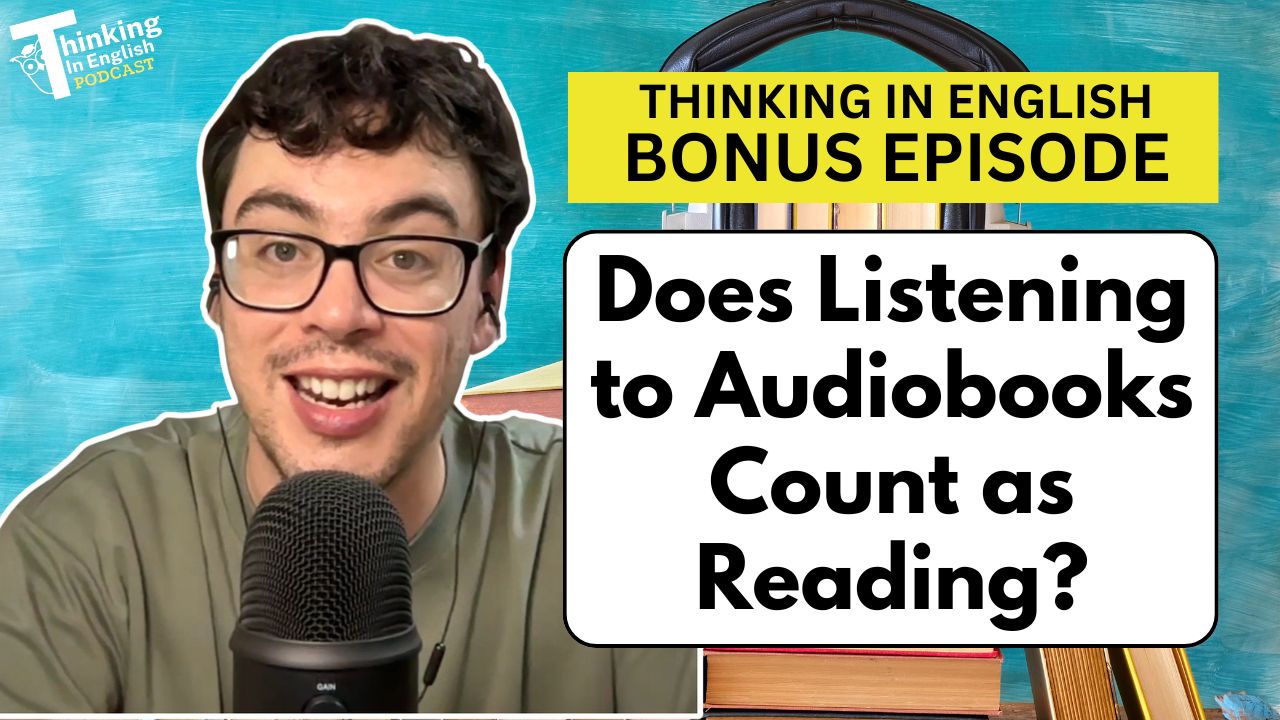
Is listening to an audiobook the same as reading a book?
This debate is quite common online. Some people argue that listening to audiobooks is a great way to access more books. Others argue that listening to a book is completely different from reading one.
Personally, I’ve always found this argument a little strange. Over the past few months I’ve been listening to a huge number of audiobooks. I’ve listened to the full-cast versions of the Harry Potter books, science-fiction novels like The Martian and Project Hail Mary, classics like The Great Gatsby and 1984. And honestly? I preferred this to reading a physical book because I just don’t have the time to read.
But it also made me wonder: what actually counts as reading?
This question connects really nicely to last week’s main episode about the history of books. In that episode, I talked about oral storytelling traditions long before writing existed, ancient manuscripts, the invention of the printing press, and the rise of modern publishing. And right at the end of that episode, I briefly mentioned audiobooks.
If human stories originally existed as spoken performances passed from person to person through voice and memory, then maybe audiobooks are actually closer to the original form of storytelling than printed books are.
So today, I want to explore the world of audiobooks.
What exactly are audiobooks? Where did they come from? Why have they become so incredibly popular over the past few years? And scientifically speaking… does listening to an audiobook actually count as reading?
Let’s find out.
Unlock the full episode and join the conversation by becoming a Patreon member today!
Interactive Transcript

Listen Here
 Spotify
 Patreon
Transcript
Vocabulary Games and Activities!
Learn and practice vocabulary from this Thinking in English episode.
Practice using 5 different study games and activities – including writing, listening, and memorisation techniques!
Flashcards
Matching Game
Learning Game
Test Yourself
Listening and Spelling
