

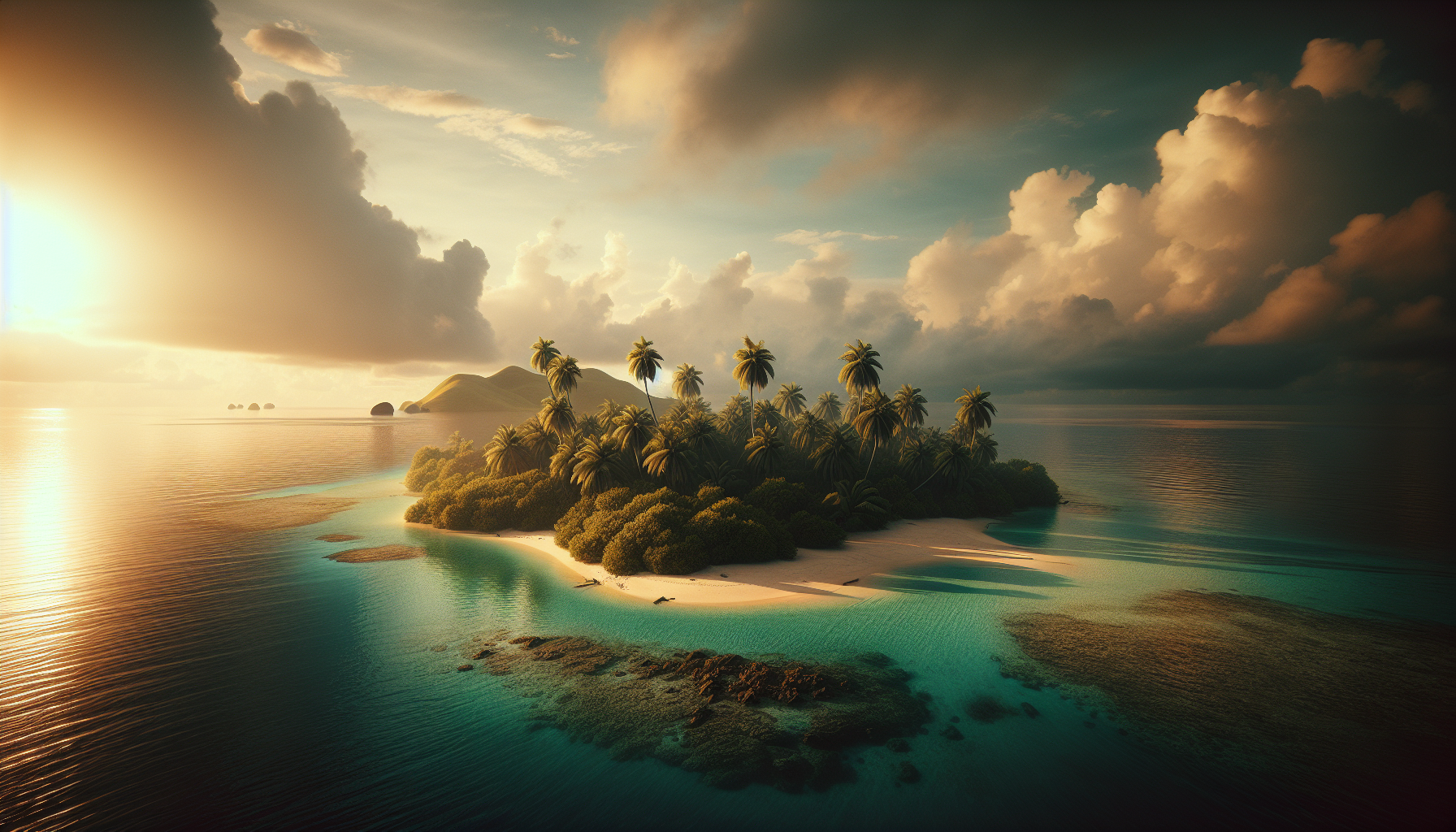
You might not have heard about the Chagos Islands, but I think it is a story everyone should know.
It is a story that involves colonialism, the construction of a secretive military base, and the entire population of the islands being forcibly removed from their homes and kicked out of their islands by the UK government.
Hopefully you’ll learn something new today!
Listen Here!
Interactive Transcript!
You Can Now Read and Listen at the Same Time With an Interactive Transcript!

Vocabulary
- Archipelago (Noun): A group or chain of islands.
- The Philippines is an archipelago consisting of over 7,000 islands.
- Dependency (Noun): A territory controlled or governed by another country.
- Puerto Rico is an unincorporated territory of the United States, making it a dependency.
- Strategic (Adjective): Important or crucial for achieving a specific purpose.
- The company chose a strategic location for its new headquarters, close to major transportation routes.
- Indigenous (Adjective): Originating or occurring naturally in a particular place; native.
- The indigenous people of the region have lived here for thousands of years.
- To evict (Verb): To force someone to leave a property or land, typically by legal means.
- The landlord decided to evict the tenants for failing to pay rent on time.
- Sovereignty (Noun): The authority of a state to govern itself and make decisions within its territory.
- The declaration of independence marked the nation’s sovereignty from colonial rule.
- Resettlement (Noun): The process of moving people to a new place to live.
- After the disaster, the government organized the resettlement of affected families to safer areas.
Introduction
Imagine if you were kicked out of your home. Imagine how you would feel if your home country, the place you were born and your family have lived for generations, was stolen from you.
Imagine coming from one of the most remote islands on the planet, in the middle of the Indian Ocean, and being forced to move thousands of miles away. Imagine an entire population of people being forcibly removed from their home.
Then, imagine if the reason you lost your home is so the USA could build a military base and wanted no one to live nearby.
This is the sad, disturbing, and infuriating story of the Chagos islands and the Chagossian people.


The Chagos Islands
The Chagos Islands, or the Chagos Archipelago, is a group of islands in the centre of the Indian Ocean. They are one of the most isolated inhabited island groups in the world and are also in a very strategic location.
The Chagos Islands are located about 1600 kilometres south of India and in an area not affected by cyclones or tropical storms.
While there are a number of different islands that make up the Chagos Archipelago, the largest and best known is Diego Garcia. We’ll talk about the development and controversy surrounding the islands in a few minutes, but you should know that islands are currently administered and controlled by the United Kingdom.
The official name of the Chagos Islands is the British Indian Ocean Territory, which was established in 1965. This is a territory of the United Kingdom, which is a confusing concept and means that while they are not actually part of the UK, the UK controls the islands.
I’ve recorded episodes on a few other British Overseas Territories before, including the Falkland Islands and Pitcairn Island!

The History of the Chagos Islands
Early History
The history of the Chagos Islands is deeply connected and intertwined with the history of European colonialism.
In the 15th and 16th centuries, European countries took the seas. They sailed across the world, reaching new places, establishing trade routes, and brutally colonising some areas.
The initial explorers often came from Spain and Portugal, and then were late joined by (and often overtaken by) the Dutch, French, and British Empires. Many of these new territories and trading partners were located in Asia, which was a challenge to get to by ship.
This was before the Suez Canal had been built. To reach Asia, Europeans had to sale around the coast of Africa, or even in some cases tried to sale underneath South America, to reach the East. During these journeys they established bases and connections in regions along the way and discovered many previously unknown and uninhabited places.
In the 16th century, Portuguese sailors discovered the Chagos Islands. The islands, in the middle of the Indian ocean and on the trade routes to Asia, were an important and strategic location. They were the perfect place for European explorers to stop at.
When the Portuguese discovered the islands, they were uninhabited. This means there was no one living there.
In the late 18th century, the Chagos Islands were taken over by France. France already had a colony in the Indian Ocean, Mauritius, which was further south than Chagos. The Chagos Islands, as well as the Seychelles Islands, became dependencies of Mauritius.
The French used the Chagos Islands to grow coconuts and sell the products back in Europe.
As I said previously, the Chagos Islands were previously uninhabited, so the French needed someone to work the plantations they set up. Like with many colonies, the French imported slaves from Africa.

British Colony
At the beginning of the 19th century, French emperor Napoleon Bonaparte led France into a series of wars against other European countries, which came to be known as the Napoleonic Wars.
These wars ended with Napoleon’s defeat at the Battle of Waterloo in 1815. The Treaty of Paris was signed to end the wars officially, and punished France for their actions.
There were many terms of the Treaty of Paris, including forcing Napoleon to live on the island of St Helena (one of the remotest islands in the world) for the rest of his life. One of the other major terms was the removal of many of Frances’ colonies and territories, including Mauritius.
Mauritius, and its dependencies the Seychelles and the Chagos Islands, became part of the British empire. At the beginning of the 20th century, Britain decided to separate the colonies –the Seychelles became its own colony, but the Chagos Islands continues to be administered by the British colony in Mauritius.

British Indian Ocean Territory
After the Second World War, the world fell into a period of Cold War between the USA and its allies, and the Soviet Union and their allies.
During the Cold War, each side were looking for any way to get a strategic advantage over their enemies. Britain’s remote colonies offered a unique opportunity. They were so far away from any other settlements that it was incredibly difficult to spy on them.
The Chagos Islands, specifically, are located in a very useful location for a military base – between Africa, India, and Southeast Asia.
So, in 1965 Britain decided to create the British Indian Ocean Territory from some of the remote islands they owned. They took Aldabra Island and the Farquhar and Desroches islands from the Seychelles colony, and the Chagos Islands from Mauritius, and combined them to create the British Indian Ocean Territory.
During the 1960s and 1970s, many British colonies became independent. Mauritius, for example, became an independent country in 1968 and the Seychelles became independent in 1976. When the Seychelles became independent, they were given back their former islands. So, the British Indian Ocean Territory now only includes the Chagos Archipelago.
According to the British government’s official history of the British Indian Ocean Territory, they have also promised to return the Chagos Islands to Mauritius, but only when they are “no longer required for defence purposes.”
The issue with these statements is that there is no deadline or clear point in the future when the islands will be returned… they could always be needed for defence purposes.

Diego Garcia
In fact, what “defence purposes” are the Chagos Islands are currently used for?
The motivation behind the creation of the British Indian Ocean Territory was a deal between the United States and the UK. The agreement was for the US to build and establish military facilities on the largest island, Diego Garcia.
In 1971, a major facility was built on the island, and continues to be occupied by around 4000 soldiers and military personnel at any time.
What do they do on Diego Garcia?
It is not really clear. The island is so isolated that it is difficult to accurately work out what is happening there.
However, we know for certain that Diego Garcia has been used by the United States to launch air raids and operations in the Asian region. More specifically, aircraft from Diego Garcia were used in the Persian Gulf War in the 1990s, and in the Afghanistan and Iraq Wars.

The Fate of the Chagossians
From an uninhabited island discovered by Portuguese explorers to a coconut growing French colony, to part of Mauritius, to a major US military base, the Chagos Islands have undergone a lot of changes.
But there is part of this story that we have not talked about in any detail so far… the people of the islands.
It is true that the islands were uninhabited before European colonialism, but it didn’t stay this way. The French brought slaves from Africa, especially from places like Madagascar and Mozambique.
Later in the 19th century, under British control, workers from India and modern-day Malaysia were also brought to the islands as farmers, fisherman, and coconut plantation workers. The British also freed the enslaved population in 1840 after slavery was banned in the British empire.
The mix of former African slaves and Asian workers formed a unique culture and group of people known today as the Chagossians or the Ilois. They had their own language on the islands, a French based creole language, and the only major industry of any kind was coconut farming.
You may notice I am using the past tense when speaking about the Chagossians on the Chagos Islands, and this is because there are none of them left there. They were all evicted, kicked out, and forcibly removed by the United Kingdom.
Between 1967 and 1973, all of the Chagos Islanders were removed. They were offered the choice to move to Mauritius or the Seychelles, and a few eventually moved to the United Kingdom.
In April 1971, Britain made it illegal, a criminal offence, to be on the Chagos Islands without military permission. There are reports that some Chagossians were threatened with physical violence, and Britain stopped supplying food to the islands.
How could this happen?
The British government claims that the workers on the Chagos Islands were simply contract labourers. Even though they lived on the islands for generations, they were never allowed to own any land or property. Instead, the coconut planations of the Chagos Islands were owned by overseas investors who allowed the Chagossians to live on their land.
The British government bought the land from the private landowners, and then chose to evict all the Chagossians.
However, while the Chagos Islanders may not have owned any property, and were the descendants of former slaves, they have been recognised as the indigenous people of the islands. The United Nations and human rights groups like Human Rights Watch and Cultural Survival all recognise the Chagossians as an indigenous group.
In fact, records of memos and documents produced by the UK Foreign Office in the 1970s revealed that the British government knew the Chagossians were likely a protected indigenous group, and therefore purposefully lied when describing them as a semi-permanent population of contract workers.
Despite this, the official history of the British Indian Ocean Territory still describes the Chagossians not as a group of people, but as “Mauritian and Seychellois contract workers and their families.”
Today, there are communities of Chagos Islanders in the UK, especially in the town of Crawley and the city of Manchester, as well as smaller groups in Mauritius and the Seychelles. There was a change in British law about 20 years ago, which gave many of the Chagos Islanders British citizenship.

Was The Eviction of the Chagossians Legal?
The Chagossians and their families have not stopped protesting, raising awareness, and launching legal campaigns to return to their home.
But was the UK acting legally when they evicted the Chagossians?
There have been a lot of court cases on this issue.
In the year 2000, the British High Court found that the UK government had illegally removed the Chagos Islanders. The court ruled that they should be allowed to return back to the islands, but not to Diego Garcia which would still be a UK and US military facility.
The UK government naturally appealed this decision, losing multiple different court cases until the year 2007 when they took it to the highest court in the UK at the time, the House of Lords.
As they had lost at the highest court in the UK, the Chagos Islanders had no more chances to appeal within in Britain. In 2016, their right to return was again denied by the government.
However, internationally, there has been a little more success.
Mauritius, which once controlled the islands when they were both British colonies, has long argued that Britain unfairly took them. They argue that Mauritius was forced to give the UK the Chagos Islands, in return for the UK allowing Mauritian independence in the 1960s.
Mauritius has launched international court cases and complained to the United Nations, and they have been relatively successful.
In 2019, the International Court of Justice found the United Kingdom probably did not have sovereignty or ownership of the Chagos Islands and should give them back to Mauritius. This was not legally binding.
And in the same year, the United Nations General Assembly gave Britain a 6-month deadline to start handing the islands back to Mauritius.

Will the Chagos Islands Ever Be Returned?
So, will the Chagos Islands ever be returned to Mauritius? And will the Chagossians people ever be allowed to reutrn to the islands permanently?
These are difficult questions.
Diego Garcia is a very valuable military base for the US and the UK, with a strategic location and years of developments. It is unlikely either country will willingly give them up.
While international pressure is important, the UK and US are two privileged and powerful nations. They are both permanent members of the United Nations Security Council and have the right to veto certain decisions.
The UK have also tried to make it impossible for the Chagossians to return to the islands.
One of the most controversial actions has been the creation of a marine reserve and conservation area around the islands. This might sound like a nice thing, designed to protect the environment, but leaked documents published by Wikileaks revealed that the UK was intending to prevent the islanders return.
Fishing was to be banned, parts of the islands closed from humans, and limits put on developments and construction. In other words, if the Chagossians were ever to be allowed to move back to the islands, they wouldn’t be able to construct anything, fish in the oceans, or use the entire land.
He revealed that the military base would remain open in any plan, but the resettlement of the Chagossian people would be part of the discussion.
However, just a few months later Cleverly was replaced by David Cameron, a former British Prime Minister, who in January this year once again ruled out any chance for the return.
Unfortunately, it seems like the Chagos Islands and their people will have to wait for a long time before any real chance to move home appears.

Final Thought
The tragic story of the Chagos Islands and the Chagossian people reveals a disturbing history of colonial exploitation, forced eviction, and ongoing injustice. From the arrival of European powers to the establishment of a strategic military base, the islands have seen changes at the expense of their former inhabitants.
Despite legal battles and international pressure, the prospects of return for the Chagossians remain unlikely. Their rights and desires are overshadowed by geopolitical interests, military bases, and governmental reluctance.
I think the story of the Chagos Islands is relatively unknown, but one of the best examples of the ongoing injustices caused by colonialism.
What do you think? What should happen to the Chagos Islands? What would you do if you were in the same situation as the Chagossian people?
Extended Vocabulary List
Become a Patreon Subscriber to Access the Extended Vocabulary List!

Vocabulary Games and Activities!
Learn and practice vocabulary from this Thinking in English episode.
Practice using 5 different study games and activities – including writing, listening, and memorisation techniques!
Flashcards
Matching Game
Learning Game
Test Yourself
Listening and Spelling
Do you want to Think in English?
I’m so excited that you found my blog and podcast!! If you don’t want to miss an article or an episode, you can subscribe to my page!
