

Pizza is one of the most popular foods around the world, but how much do you know about its history?
Today, we’ll look at how pizza evolved from ancient flatbreads to a food for working people in Naples, to a globally popular dish!
Listen Here!
 Apple Podcasts
 Spotify
 YouTube
Interactive Transcript!
You Can Now Read and Listen at the Same Time With an Interactive Transcript!

Vocabulary
- Flatbread (noun): A type of bread made with flour, water, and salt, and then rolled into flattened dough.
- The restaurant served a delicious flatbread topped with olive oil and herbs.
- Topping (noun): Food items added on top of a dish.
- My favourite pizza topping is pepperoni.
- Peasant (noun): A poor person of low social status who owns or rents a small piece of land for cultivation.
- In the past, peasants worked hard in the fields to grow their own food.
- Ingredient (noun): Any of the foods or substances that are combined to make a particular dish.
- Fresh ingredients like tomatoes, basil, and mozzarella are essential for making a good pizza.
- Speciality (noun): A dish that a restaurant or region is famous for.
- The Margherita pizza is a local speciality of Naples
- Endorse (verb): To declare one’s public approval or support of something.
- The celebrity chef endorsed the new restaurant, praising its menu and delicious food.
The Popularity of Pizza
What is my favourite food?
I find this question really difficult to answer. There are so many delicious foods that I have tried and depending on my mood or feeling the food I want to eat changes.
Something that I am always excited to eat is a delicious pizza. Whether it is a cheap frozen pizza from the supermarket (like I ate all this time as a student) or a fantastic Neapolitan style pizza cooked with the best ingredients, I love all kinds of pizza.
I’m not alone. Pizza is certainly one of the most popular dishes around the world.
Today, I want to look at the history and development of pizza. How did Pizza become perhaps the most popular food in the world? And what are some of the different styles of pizza around the world?


What is a Pizza?
Before we get into the history of this amazing dish, I think we need to take a second to think about a basic question. What is a pizza?
The dictionary defintion, from Oxford Languages, is “a dish of Italian origin, consisting of a flat round base of dough baked with a topping of tomatoes and cheese, typically with added meat, fish, or vegetables.”
While this defintion probably fits for the majority of pizzas consumed today, I think it is a little too restrictive.
Pizza marinara, for example, is one of the oldest styles of modern pizza dating from 1735 but includes no cheese. Instead, the toppings are simply tomato sauce, olive oil, oregano, and garlic.
Or there is pizza bianca, white pizza, which is often served in the Italian captial, Rome, and has no tomato sauce.
Pizzas today come in so many styles and forms, and the history of the dish is so varied, that a tight defintion like you will find in dictionary is not always useful.
Writing this episode made me remember an old YouTube series I used to watch 5 or 6 years ago called “Really dough?” It featured two Americans, including one who owns perhaps the most popular pizzeria in New York, travelling around the US trying unconventional pizzas and deciding if they were really pizza or not.
They tried Ramen pizza, fried pizza, dessert pizza, mustard pizzas, and debated whether they were pizza or not. I recommend watching the series!
I think there are 3 key features that are found in most pizzas.
First is dough. This is a simple mixture of flour, water, yeast, and salt, rolled out into a flat shape.
Second is sauce. Most commonly the sauce will be tomato-based, though variations can include pesto, white sauce, or no sauce at all.
Third is toppings. Cheese is found on most pizzas. Mozzarella is the most traditional and popular choice, but other types of cheese can also be used. Other toppings range from meats (like pepperoni, sausage, or ham) to vegetables (such as bell peppers, onions, and mushrooms), as well as herbs and spices.
These are just the basic elements that make up a pizza, but the dish itself is incredibly adaptable.
Some styles of pizza have strict definitions. Traditional Neapolitan pizza, for example, has an official legal defintion that sets out acceptable cooking methods, ingredients, pizza shapes and sizes, and toppings – if a pizza doesn’t follow these guidelines, it can’t be called a Neapolitan pizza.
Around the world, various other styles of pizzas have developed with completely different cooking methods and a variety of different ingredients.
There are also dishes that resemble “pizza” in some way (maybe dough, sauces, and toppings) but are completely distinct and developed separately.
There are dishes like Lahmacun or Manakish which are popular in Turkey and Lebanon, and are sometimes described as “Turkish pizza” or “Lebanese pizza”, but developed separately as flatbreads with toppings.
Or even arepas, popular in Colombia and Venezuela, contain many of the same features as a pizza (cooked flatbread with cheese, sauces, and toppings), but are obviously not pizzas as they originated in South America hundreds of years ago.
How did Pizza develop?

History of Pizza
Early History
Like many famous dishes around the world, pizza is the result of hundreds of years of development and evolution. Flatbreads and other dishes that resemble pizza in some ways have existed for thousands of years.
Civilizations such as the Greeks, Egyptians, and Romans all had variations of flatbreads that were topped with ingredients like olive oil, herbs, and cheese. These early versions of pizza were simple and baked in ovens or on hot stones.
Greek pitta bread, Italian focaccia and piadina, and manakish from the Levant region are all examples of flatbreads that trace their origins to the ancient Mediterranean.
The word pizza first appeared in texts over 1000 years ago. There are a variety of different theories over where the word came from: it may share a similar origin to the Greek pitta flatbreads; it could come from the Lombard word for “mouthful”; or it came from an early Italian word for “clamp” (pinza).
The first recorded mention of the word pizza comes Gaeta in Italy in the year 997 AD, but it was probably a very different pizza to the ones we have today.

Development of Modern Pizza
Over time, these popular flatbreads evolved into modern pizza. These developments occurred mainly in the Italian city of Naples in the 18th and 19th centuries.
Naples was one of Europe’s major cities and was rapidly growing in the 18th century with thousands of peasants from the countryside moving in search of work. These men typically worked as casual labour and needed food that was cheap and easy to eat.
Pizzas met this need. They could be cut to different slices, and were topped with affordable ingredients like salt, lard, and garlic.
At this time, pizza was just a dish for the poorest people in the city. The wealthy and visitors from other cities and countries looked down at pizzas. In 1831, Samuel Morse even described pizza as looking “like a piece of bread that has been taken reeking out of the sewer.”
These dishes sometimes included an incredibly unpopular ingredient, that was not commonly used by chefs, cooks, and the elite people at the time: the tomato.

The Introduction of Tomatoes
Tomatoes came to Europe as part of the Columbian Exchange. The Columbian Exchange refers to the widespread transfer of plants, animals, culture, human populations, technology, and ideas between the Americas and the Old World (Europe, Africa, and Asia) following the journeys of European explorers in the late 15th and early 16th centuries.
After the Spanish conquest of the Aztec Empire in the early 16th century, tomatoes were brought back to Europe by Spanish explorers. Initially, they were grown mainly as ornamental plants (plants to decorate a house or garden), as tomatoes were initially thought to be poisonous due to their membership in the nightshade family.
Gradually, tomatoes became more accepted as a food, especially in Spain and Italy in southern Europe.
Tomatoes grew relatively easily in the Italian climate and were cheap due to their unpopularity with wealthier people. Therefore, they became part of many peasant and poorer dishes including being used as a pizza topping.

The Invention of the Margherita
The popularity of pizza, especially pizzas topped with tomatoes, changed rapidly in 1889. This was the year that the Margherita pizza was invented, perhaps the most iconic and popular pizza around the world.
In 1889, Queen Margherita of Savoy visited Naples with her husband, King Umberto I. Naples was a proud city, the former capital of the Kingdom of Two Sicilies, and the royalty wanted to increase their popularity in the region.
During their stay, chefs trained in French cuisine cooked the best French dishes for the royal family. However, the King and Queen expressed a desire to try some local specialties including pizza.
Raffaele Esposito, a renowned pizzaiolo (pizza maker) was summoned to prepare pizzas for the royal couple. He made 3 different pizzas.
One was topped with lard (fat), basil, and a type of cheese. You can still find this pizza today, known as mastunicola.
The second pizza was topped with caciocavallo, a word in the local Naples dialect for “whitebait” (meaning very young Mediterranean fish).
The third pizza was topped with tomato sauce and mozzarella cheese. The pizza maker decided to add basil as well, symbolizing the red, white, and green of the Italian flag.
Queen Margherita was reportedly so impressed with this pizza that it was named in her honour, the pizza margherita. Pizza transformed from a local dish for Naples’ working people, to a popular national dish that was endorsed by the royal family.
Pizza gradually spread out of Naples around Italy. Neapolitans, the people of Naples, moved in search of work and opportunities, taking their local dishes with them. During WW2, a combination of people moving around the country and American soldiers asking for pizza wherever they went pushed more restaurants to offer pizza.
Post war tourism also encouraged more cities and restaurants to sell pizza as it was such a popular dish for people from other countries.

Spread of Pizza Around the World
It is arguable that pizza spread out of Italy faster than it spread in Italy.
The late 19th and early 20th centuries saw waves of Italian immigrants moving to the United States and other parts of the world. They set up their own businesses and cooked their own dishes,
In 1905, the first pizzeria in New York city was opened – Lombardi’s. It spread rapidly across the United States, quickly becoming a national dish.
Cities with large Italian communities, like New York, Chicago, and Philadelphia, became home to many pizza restaurants. Soon pizza restaurants were opened by non-Italians, often immigrants from other parts of Europe, and began to adapt to the tastes and ingredients of the USA.
After World War II, American soldiers stationed in Italy developed a taste for pizza and helped spread its popularity when they returned home. The post-war economic boom and the rise of fast-food culture in the 1950s and 1960s further propelled pizza into the mainstream.
As American culture and cuisine spread globally, so did pizza. International pizza chains like Pizza Hut, Domino’s, and Papa John’s played significant roles in making pizza a worldwide favourite.
More recently, higher quality traditional Neapolitan restaurants have also started to spread around the world, offering a different experience to the fast-food style pizzas of North America.

Pizza Today
Today, there are hundreds of pizzas around the world cooked in various different styles and topped with different ingredients.
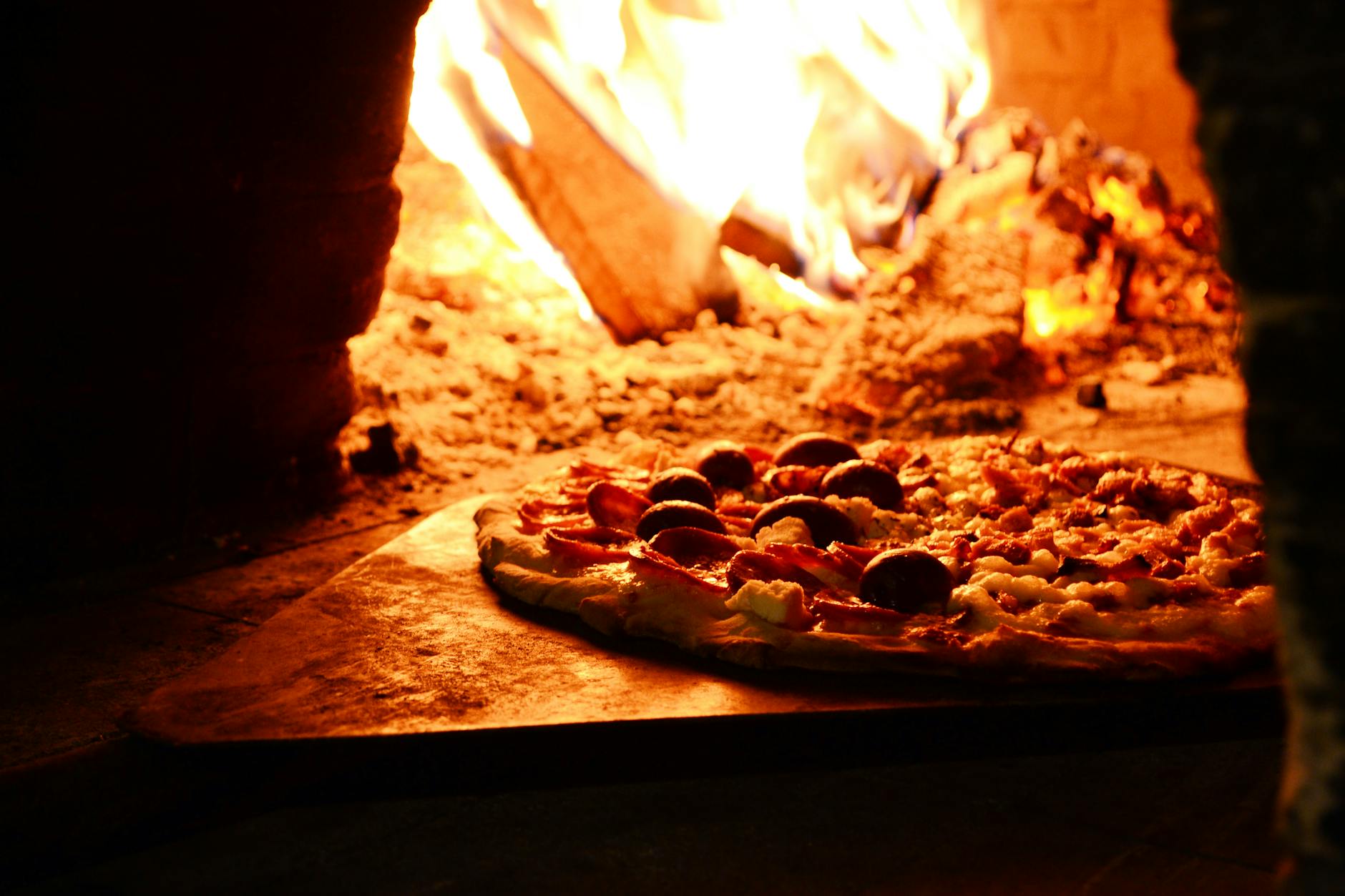
Neapolitan pizza is perhaps the most iconic style of Italian pizza. It is characterised by a thin, soft, and chewy crust with a slightly charred edge. It is typically topped with simple and high-quality ingredients like San Marzano tomatoes, fresh mozzarella (often buffalo mozzarella), fresh basil, and olive oil. And traditionally cooked in a wood-fired oven.
There are other styles of Italian pizza.
Roman pizza often has a thin and crispy crust, and is often baked in large rectangular trays and sold by the slice.
Pizza a Metro is a long, rectangular pizza served by the meter (metro) or half-meter. They are often cooked in a wood-fired oven on a wooden paddle.
Sicilian pizza has a thick, spongy, and soft crust resembling focaccia. It is typically topped with tomatoes, onions, anchovies, herbs, and a hard Sicilian cheese.
The USA also has an incredible variety of pizzas.
New York-style pizza is probably just as iconic and popular as Neapolitan style pizza. New York pizza has large, thin, and foldable slices with a crisp yet chewy crust. It is topped with tomato sauce and mozzarella cheese, and traditional toppings include pepperoni, sausage, and mushrooms.
Chicago-style pizza, or deep-dish pizza, is quite controversial in the USA as there is a constant debate over whether it is really a pizza or not. Chicago pizza has a deep, thick crust with high edges, resembling a pie. Layers of cheese, meats, and vegetables placed are directly on the dough, then topped with a tomato sauce.
California-style pizza has a thin and crispy crust, but it is best known for their innovative toppings – things like artichokes, goat cheese, arugula, smoked salmon, and avocado.
While New York style pizza is the most famous style of US pizza, New Haven in Connecticut is often considered home to the best pizzas in the US with their apizza.
Apizza is topped with a simple tomato sauce, grated pecorino cheese, and garlic. They also have unique toppings, like the white clam pizza.
Around the world, pizza has been adapted and changed to fit local tastes which can lead to some unusual and definitely not traditional toppings.
Hawaiian pizza, invented by a Greek immigrant in Canada using pineapple and ham as the toppings, always causes arguments about whether pineapple should be on a pizza.
If you don’t like pineapple on a pizza, you might want to stay away from Swedish pizzerias as you probably won’t like their banana and curry pizzas.
In Japan it is very common for pizzas in supermarkets to be topped with potatoes and mayonnaise.
In India, popular toppings include paneer (a type of cheese) and pickled ginger.
And apparently in Costa Rica shrimp and coconut is a popular pizza.
Pizza has evolved from a local Neapolitan flatbread, to one of the most popular dishes around the world!

Final Thought
Hopefully after listening to today’s episode, you know a little more about pizza, its history and its evolution into a globally popular food.
We’ve discussed the ancient origins of pizza, the delicious Margherita pizza, and also some of the diverse styles found around the world today. Pizza is still developing and evolving into different forms and new toppings.
What is your favourite types of pizza? What is your favourite topping? Does your country have any unique pizza styles or toppings?
Extended Vocabulary List
Become a Patreon Subscriber to Access the Extended Vocabulary List!


Vocabulary Games and Activities!
Learn and practice vocabulary from this Thinking in English episode.
Practice using 5 different study games and activities – including writing, listening, and memorisation techniques!
Flashcards
Matching Game
Learning Game
Test Yourself
Listening and Spelling
Do you want to Think in English?
I’m so excited that you found my blog and podcast!! If you don’t want to miss an article or an episode, you can subscribe to my page!

My favourite pizza is surely the pizza which in Italy is named PIZZA NAPOLETANA (“Napolitan pizza”), a margherita pizza topped with anchovies and capers in addition to tomato and mozzarella.
The name “pizza PEPPERONI” is strange and funny to hear for me (and for italians in general), because the word “pePPeroni” does not exist in italian. It exists the word “pePeroni”, with only one P, which simply means peppers. PepPeroni topping in Italy is called “salamino piccante”, which means “spicy salami”.
According to the italian “Treccani” dictionary (the most prestigeous italian dictionary), the word “pizza” might come from the ancient italian “pistare”, that is to say “to push”. In fact making pizza involves push the dough.
Thank you Tom for this really enjoyable episode… today I am going to eat pizza for sure.
For it’s a interesting why Russian people didn’t create pizza with redish…
Wow. I never knew about “pepperoni” being an Italian-American word. Perhaps there is an episode on this topic in the future!
Hello! Thanks for your class! But in this link, the audio podcast is related to the 311 chapter instead of to 310.
So sorry about this! I was on vacation for a week and the podcast player didn’t automatically update. It is fixed now!