

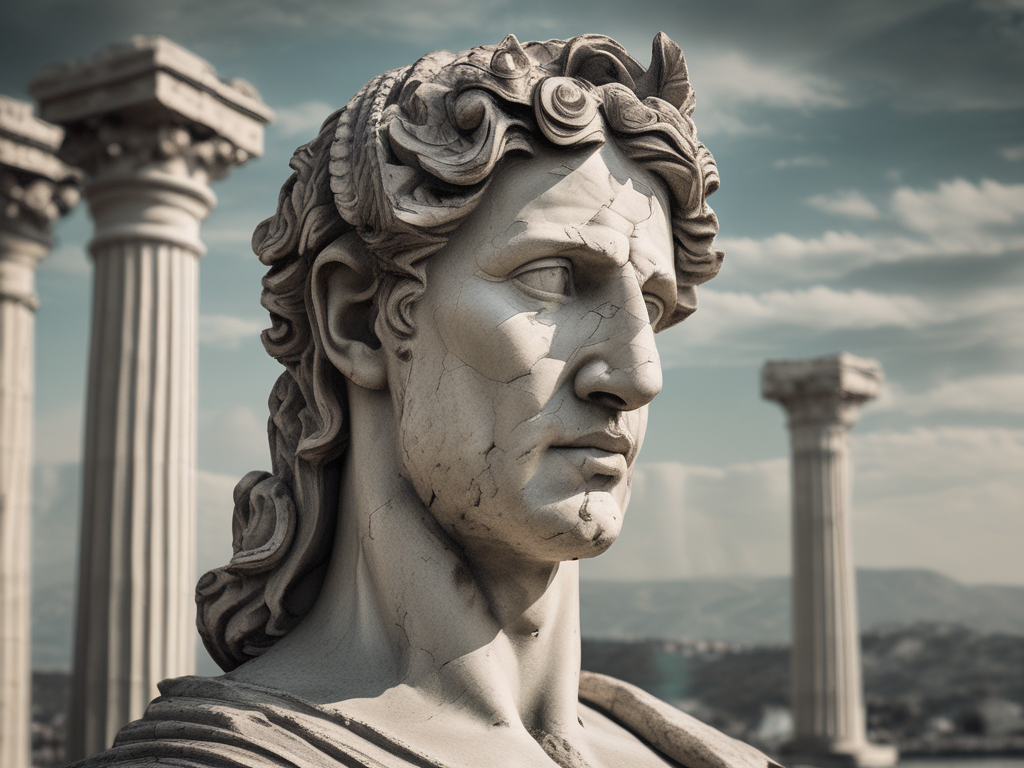
Macedonia is one of the most controversial names in Europe, perhaps even in the world. The country now known as North Macedonia and Greece, home to the region called Macedonia, have had a bitter dispute over the name since the early 1990s.
Today, I want to look at they Macedonia is so controversial. We’ll discuss the Ancient Greek Kingdom of Macedonia and its famous leader Alexander the Great. We’ll talk about how two Macedonia’s appeared in modern geography. And we’ll consider why Greece and North Macedonia are so passionate about the name!
Listen to this episode to learn more about this issue while practicing your comprehension and English vocabulary!
Listen Here!
 Apple Podcasts
 Spotify
 YouTube
Interactive Transcript!
You Can Now Read and Listen at the Same Time With an Interactive Transcript!

Vocabulary
- Dispute (noun): A disagreement or argument about something important.
- The naming dispute between Greece and North Macedonia lasted for nearly 30 years.
- Kingdom (noun): A country, state, or territory ruled by a king or queen.
- The Kingdom of Macedonia was a powerful entity in ancient Greece.
- Slavic (adjective): Relating to the peoples of Eastern Europe who speak Slavic languages.
- The Slavic people migrated into the region in the 6th and 7th centuries.
- Identity (noun): The fact of being who or what a person or thing is; a sense of self.
- The name Macedonia is important to the national identity of North Macedonians.
- Heritage (noun): the cultural traditions passed down from previous generations.
- Alexander the Great is a significant figure in Greek heritage.
- Bitter (adjective): refers to a conflict characterized by strong emotions and resentment.
- The dispute over the name Macedonia was a bitter conflict between Greece and North Macedonia.
- Recognise (verb): acknowledge the existence, validity, or legality of.
- Many countries were hesitant to recognise the Republic of Macedonia due to the ongoing dispute with Greece.
Introduction
In May, the European country North Macedonia held parliamentary and presidential elections. A new president was elected, Gordana Siljanovska-Davkova, who gave an inauguration speech – like happens in almost every country after an election.
In her speech, the new President covered a variety of topics, and made the following statement:
She used the name “Macedonia”, not “North Macedonia.”
This might seem like an unimportant thing for most of you listening. However, it has reignited one of the longest naming disputes in recent history.
From the early 1990s until 2019, Greece and the country now known as North Macedonia engaged in a long and bitter dispute over the use of the name Macedonia. The dispute stopped North Macedonia from joining international organisations like NATO and the European Union for nearly 30 years.
In 2019, Greece and North Macedonia finally agreed to accept the name “North Macedonia” as the official country name, but the recent comments by the new North Macedonian president has reignited the dispute.
Today, I want to take a look at this dispute. We’ll look at the Ancient Kingdom of Macedonia and the famous Macedonian, Alexander the Great. We’ll then take a look at the modern Greek region of Macedonia, and how (and why) another Macedonia appeared in the 1900s. Finally, we’ll talk about the agreement to name the country North Macedonia and why names are so important!


Ancient Macedonia
Kingdom of Macedonia
The story of Macedonia begins in Ancient Greece around 3000 years ago.
Macedonia was a kingdom in northern Greece, home to the Mackednoi tribe who gave their name to the region. According to Herodotus, the famous ancient Greek historian, the people of Ancient Macedonia were the first to use the name “hellenes”, which is now used to describe all things Greek. Greece’s official name today is the Hellenic Republic.
The Kingdom of Macedonia bordered other Greek Kingdoms and tribes to the south, and to the north was the kingdom of Paeonia. Ancient Paeonia roughly equates to the same area as the modern country North Macedonia, while the ancient Kingdom of Macedonia is roughly equivalent to the modern Greek region called Macedonia.
The Macedonians became the most powerful group in ancient Greece under the leadership of King Phillip II. Phillip transformed Macedonia into a formidable military power, and through his diplomacy and military power he eventually united the kingdoms of ancient Greece under his control.
Phillip was assassinated in 336 BCE and replaced by his son.

Alexander the Great
His son was Alexander III, known to history as Alexander the Great, the most famous Macedonian and perhaps the most famous of all ancient Greek leaders.
Alexander’s leadership was unprecedented – his forces defeated numerous powerful empires and spread Greek culture and Macedonian rule as far as Egypt and India. He is credited with creating the Hellenistic Era, an era characterised by the blending of Greek culture with the cultures he conquered.
He also established a lot of new cities, many of which he named after himself. The most famous city was Alexandria in Egypt, which became a centre of knowledge with a famous library.
Legend says that Alexander never lost a battle, but he died from illness before the age of 40, in the year 323 BCE. This, ultimately, led to the downfall of his Greek empire and the kingdom of Macedonia. The empire was split between his top generals, who quickly fell out with each other and engaged in a series of conflicts and battle over land.

Roman Control
In the year 160 BCE, the Romans conquered Greece. They established administrative regions to help them govern their new lands.
The kingdom of Macedonia was no longer, but the name continued to be used by the Romans. Macedonia became a province of the Roman empire, but it was larger than the traditional kingdom. The Romans combined Paeonia and parts of Ancient Thrace with the kingdom of Macedonia to create their new province.
A few hundred years later, the Romans decided to divide Macedonia into two different provinces. They created Macedonia Prima or the “First Macedonia” which was made up of the same land as Ancient Macedonia and is today roughly the same as the modern Greek province of Macedonia.
They also created Macedonia Salutaris or the “Second Macedonia” in the north which includes much of present-day North Macedonia and parts of Bulgaria.

Byzantine Empire and Slavic Control
The Roman Empire was eventually divided, and the region of Macedonia became part of the Byzantine Empire.
The name Macedonia continued to be used to describe parts of the region, but the boundaries changed and evolved over time. The demographics of the region changed with Slavic immigration and invasions in the 6th and 7th centuries, and the region was constantly changing hand and leaders.
The Ottoman Empire took over the territory in the 14th century. They no longer used the name Macedonia; the name fell out of use and basically became entirely forgotten.
Over the following centuries, Macedonia continued to be used to refer to various different provinces and regions in the area of northern Greece and present-day North Macedonia, until the name fell out of use.
This is the historical context behind the naming dispute between modern day Greece and North Macedonia. Let’s take a look at this dispute in more detail.

Greek Macedonia
In Greece, the name Macedonia is considered important to their cultural identity. Figures like Alexander the Great are national heroes, and the ancient kingdom’s legacy is seen as an integral part of Greek history and heritage.
It was Greece who revived the name Macedonia in the 19th century as they pushed for independence from the Ottoman empire. It became a contested term as various countries and peoples, including Greeks, Bulgarians, and Serbs, fought to take over the land.
After the First and Second Balkan wars in the early 20th century, Greece finally reclaimed most of the territory of ancient Macedonia. The peace treaties signed after the war gave the largest part of the territory to Greece and also established an administrative region called Macedonia (which still exists today).
The Greek government has continually promoted the Greek identity of Macedonia, and occupation during World War II solidified the importance of Macedonia in Greek national identity.

North Macedonia
North Macedonia also considers the name Macedonia to be important to its cultural identity.
While Greek Macedonia and North Macedonia were once a united region, they have been separated for a long time and actually have quite different populations. Beginning in the 6th century, the region of modern North Macedonia (and also Greek Macedonia) experienced Slavic migration making it demographically very different to ancient Macedonia.
In 1912, the region was taken by Serbia in the First Balkan War and was called South Serbia, and then after WW1 it became part of the Kingdom of Serbs, Croats, and Slovenes.
In 1929, the kingdom was renamed as the Kingdom of Yugoslavia and divided into provinces. The province known as Vardar Banovina included all of modern North Macedonia including the capital city Skopje.
After WW2, the communist party took over Yugoslavia, creating the Socialist Federal Republic of Yugoslavia. Within this federal republic, the People’s Republic of Macedonia was formed. Here the name Macedonia was officially back in the region for the first time in centuries.
Yugoslavia made an effort to really create a Macedonian identity. A Macedonian language was officially described in 1944, making it more than just a Slavic dialect.

Naming Dispute
The dispute over the name Macedonia began as soon as the People’s Republic of Macedonia was created.
Greece opposed the use of the name Macedonia immediately as they were worried that Yugoslavia were using it as an excuse to invade Greece in the future and claim Greek territory. They were also angered by the establishment of a language called Macedonian, which was Slavic and not related to the language used by ancient Macedonians.
In 1991, 95% of republic voted for independence from Yugoslavia, forming an independent country called the Republic of Macedonia. However, international recognition didn’t come easily. This was because of opposition from Greece.
Greece persuaded the European Community (now the EU) to ban countries with names that could be claiming another countries territory, which meant that the Republic of Macedonia would not be able to join (as Greece has its own Macedonia).
Major protests were held in Greece in the early 1990s, as well as in places with large Greek populations (including Australia).
A few places, including Bulgaria, Turkey, and Croatia recognised the name the Republic of Macedonia, but most of the world waited until the United Nations acted.
Eventually, and after more opposition from Greece, the country was allowed to join the UN, the International Monetary Fund, and the World Bank using the name the former Yugoslav Republic of Macedonia.
Actually, this was legally not an official name. Instead, it was agreed to be a reference (not a name) in use until an agreement could be reached between Greece and the country.
While many countries recognised the country officially, using the name the former Yugoslav Republic of Macedonia, Greece refused, and relations were terrible. Greece actually imposed a trade embargo in the 1990s, preventing the FYR Macedonia from accessing ports and severely damaging their economy.
Various names were suggested for the country, include “New Macedonia” and “Slavo-Macedonia” but Greece continually refused to recognise anything including the word Macedonia.
Greece, instead, suggested names like the Republic of Skopje (the capital city) or the Vardar Republic. However, the Republic of Macedonia refused to accept a name without Macedonia.
From 2006 onwards, the country now known as North Macedonia adopted a new policy called “Antiquisation”. They named the national airport and train stations after historic figures from the Kingdom of Macedonia. They built statues of Alexander the Great and Philip II of Macedon across the country.
Again, this further angered Greece who accused their neighbours of stealing their culture and history (as the ancient Macedonian figures were from Greek Macedonia).

The Two Countries’ Positions
Greek Position
Why is Greece so opposed to North Macedonia using the name Macedonia?
First, Greece has historical and cultural concerns.
Greece believes the name “Macedonia” is historically tied to Greek culture and heritage, originating from the ancient kingdom of Macedonia. They argue that the Slavs, who arrived in the region a millennium later, lack historical connections to ancient Macedonia.
Greeks view the appropriation of the name by the Republic of Macedonia as an attempt to steal Greek history and cultural heritage. Things like using Greek symbols on national flags and naming the airport after Alexander the Great has angered Greece.
Second, Greece has territorial concerns. They are concerned the use of the name Macedonia would imply that North Macedonia also claims the Greek province of Macedonia.
Third, Greece wants to make a clear distinction between their Macedonia and the country which is why they favour a name with a geographical qualifier (like North Macedonia).
And fourth, Greek Macedonians (from the province of Macedonia in Greece) feel their identity and right to self-determination are threatened by the Republic of Macedonia’s use of the name. There is a strong regional identity among Greek Macedonians, who refer to themselves simply as Macedonians within the context of Greece.

North Macedonia Position
How about North Macedonia? Why do people there feel so passionate about the name Macedonia?
First, they see the name as important to their identity.
They argue that Slavic people have lived in the region for hundreds of years and deserve the right to call themselves Macedonian and their language Macedonian. North Macedonia continually argued that their use of the name Macedonia wasn’t a claim to Greek territory, but a reference to their identity.
Second, they say that Greek Macedonia, like the country North Macedonia, was also quite Slavic until relatively recently. When Greece took over the province of Macedonia again 100 years ago, they pursued an aggressive policy of Hellenisation – basically they had to make Greek Macedonia actually Greek.
The Greek government forced people to change names and religions, removed many Slavic cultural elements, and even moved many Greek people into the region at the expense of Slavic people.
So North Macedonia argues that the Greek region of Macedonia was similar in ethnicity and culture to them for a long time – Macedonia hasn’t continuously been just a Greek thing.

Resolution?
Eventually, after decades of arguing an agreement was reached in 2018, known as the Prespa Agreement.
The agreement was for the country to be known as The Republic of North Macedonia. In addition, the Macedonian language would finally be internationally recognised. There was an official recognition that North Macedonians are not at all related to ancient Macedonians (and they began to remove many of the references to Alexander the Great in the country).
Things seemed ok (despite occasional protests) until earlier this year when a new party was elected in North Macedonia and began to once again refer to the country as Macedonia.
The dispute over the name Macedonia has been one of the longest and most bitter naming disputes in recent history. Despite a resolution being reached, it still seems that many North Macedonians want to be called Macedonia and most Greek people do not want North Macedonia to use the name Macedonia at all.
The dispute may continue for a long time!

Final Thought
The naming dispute between Greece and North Macedonia over the use of “Macedonia” has deep historical roots and remains a sensitive issue for both nations.
Despite the 2018 Prespa Agreement, which aimed to resolve the conflict by officially renaming the country as the Republic of North Macedonia, recent comments by President Gordana Siljanovska-Davkova have reignited tensions.
This episode has tried to show the significance of historical identity and cultural heritage, demonstrating that even a name can carry real implications for national pride and international relations.
As both countries continue to struggle with accepting names, the dispute over Macedonia will continue to shape their political and cultural landscapes.
What do you think? Who should be allowed to use the name Macedonia?
Extended Vocabulary List
Become a Patreon Subscriber to Access the Extended Vocabulary List!

Vocabulary Games and Activities!
Learn and practice vocabulary from this Thinking in English episode.
Practice using 5 different study games and activities – including writing, listening, and memorisation techniques!
Flashcards
Matching Game
Learning Game
Test Yourself
Listening and Spelling
Do you want to Think in English?
I’m so excited that you found my blog and podcast!! If you don’t want to miss an article or an episode, you can subscribe to my page!
